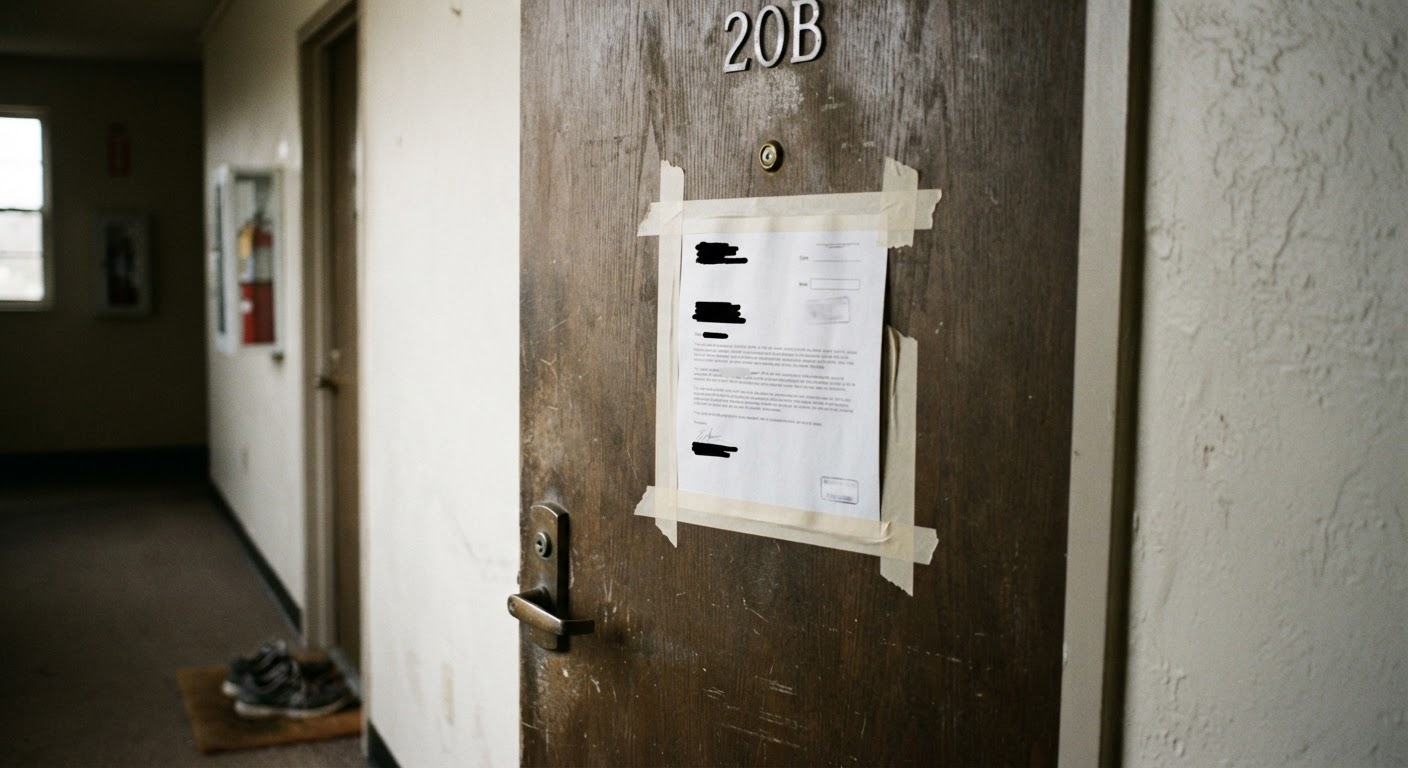
An eviction notice landing in your hand or taped to your door sets off a wave of panic that makes it hard to think clearly. That reaction is normal. But the first 24 hours matter more than almost any other stretch in this process, because they determine whether you’re acting with enough time to spare or racing a clock you didn’t read closely enough. Before you call anyone, take a breath and work through the notice itself.
Read the Notice for Dates and Deadlines First
Set aside everything else for a moment and read the notice slowly, twice. Eviction notices are built around dates, and the exact number of days you have, and what happens at the end of that window, will vary depending on where you live and what kind of notice this is. Look for:
- The date the notice was delivered or posted, not just the date printed at the top.
- The number of days you’re given to respond, pay, or move, and whether those are calendar days or business days.
- What the notice says will happen if the deadline passes with no action from you.
- Whether it names a dollar amount owed, and whether that amount matches what you believe you owe.
- Any mention of a court date, case number, or filing already made with a court.
If the notice is dense with legal language you don’t fully understand, that’s expected. Underline or circle every date and number you find, even if the surrounding sentence is confusing. Getting the timeline straight is the single most useful thing you can do right now, because it tells you how much room you actually have before you need outside help, and it keeps you from either panicking over a deadline that’s further off than it looks or missing one that’s closer than it looks.
If you genuinely cannot tell whether this notice means a court case has already started, write that question down. It’s one of the first things to ask when you do make a call.
Gather Lease and Payment Documents Right Away
While the notice is fresh in your hand, spend twenty minutes pulling together the paperwork that goes with it. You don’t need to organize it beautifully. You just need it in one place so you’re not searching for it later under pressure. Look for:
- Your lease or rental agreement, including any addendums or renewal paperwork.
- Records of your last several rent payments, whether that’s bank statements, money order receipts, a cash-app history, or canceled checks.
- Any written communication with your landlord or property manager about late rent, repairs, or complaints, including texts and emails.
- The eviction notice itself, along with the envelope or the way it was delivered, since how it arrived can matter.
- Any prior notices you may have received in recent months, even ones that seemed resolved at the time.
Take photos of everything with your phone as a backup, even the documents you’re keeping in paper form. If you’re missing something, like an old lease you never signed a copy of, note that too rather than spending hours hunting for it right now. Having an honest, complete-as-possible folder ready means that whoever you eventually talk to, whether that’s a legal aid line, a housing counselor, or a court clerk, can immediately understand your situation instead of spending the first ten minutes of a call helping you locate paperwork.
Deciding Whether This Is a Same-Day Call or a Next-Day Call
Once you’ve read the notice and gathered your documents, you’re in a much better position to judge urgency. A few honest questions can help you sort this out:
- Does the notice give you only a few days, or does it give you a longer window, such as several weeks?
- Does the notice indicate a court case has already been filed, or that a hearing date is already set?
- Is the deadline on the notice today, tomorrow, or further out?
- Are you unsure whether the notice is even valid, for instance because it lists a name or address that isn’t yours or a date that seems impossible?
If the deadline is imminent, if a hearing date is already set, or if the notice suggests a case is already moving through a court, treat this as something to act on today. Look for a local housing helpline, legal aid intake line, or emergency rental assistance line, and call before the day is out, even if you only reach a voicemail or an after-hours message. Getting yourself into a queue today is better than starting tomorrow.
If the notice gives you more breathing room, a same-day call may not be necessary. What matters more is making the call soon and deliberately, once you’ve had a chance to sleep, gather any last documents, and write down your questions. A next-day call made calmly is often more useful than a rushed one made in a panic the same evening.
When in doubt, treat it as urgent. It costs you little to make a call a day early, but it can cost you a great deal to make one a day late.
What Not to Do in the First Few Hours
In the scramble after receiving a notice, a few common instincts tend to make things harder rather than easier:
- Don’t ignore it or set it aside “for later.” Even if you plan to deal with it tomorrow, read it today so you know your actual timeline.
- Don’t pay money to anyone promising to “make the eviction disappear” quickly. Be especially wary of anyone who contacts you first, out of the blue, offering to resolve this for an upfront fee.
- Don’t sign anything new from your landlord in the heat of the moment, including a repayment agreement or a move-out agreement, without reading it fully and understanding what you’re giving up.
- Don’t assume you already know how the process works based on something a friend or relative went through elsewhere. Rules and timelines differ by location and by the type of notice.
- Don’t throw away or discard the notice, the envelope, or any related mail, even after you’ve made a call about it.
The goal for today isn’t to solve the whole situation. It’s to understand your timeline, gather what you’ll need, and figure out whether tonight or tomorrow morning is the right moment to start making calls. That’s enough for one day.